by Remco Vermeulen
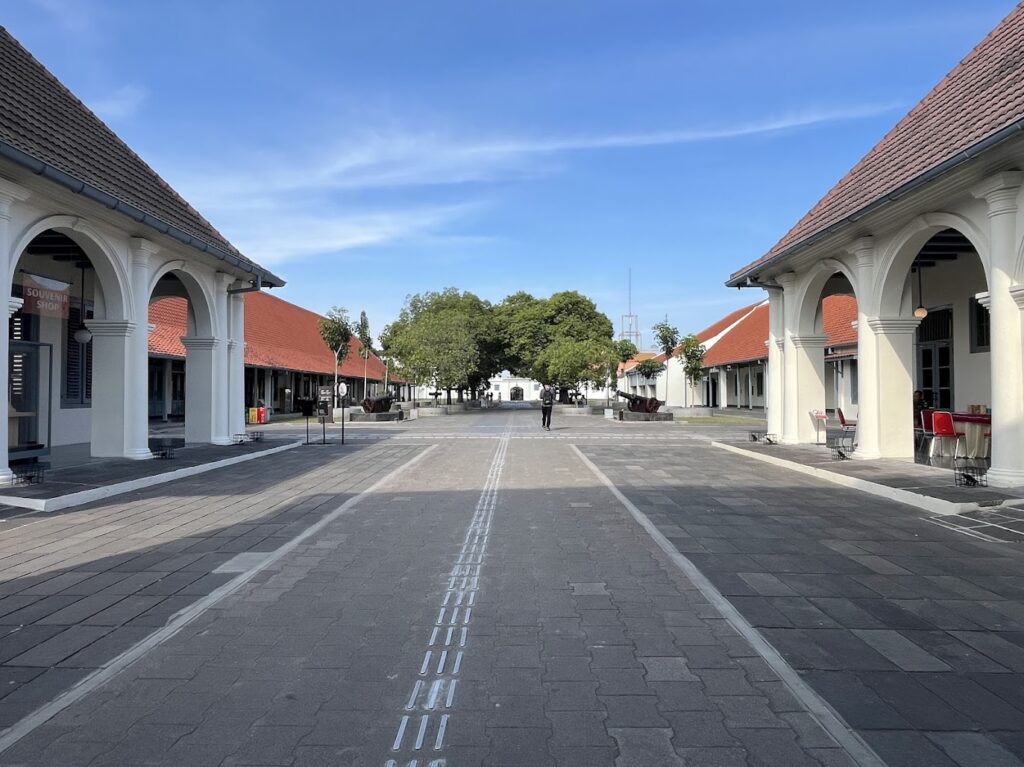
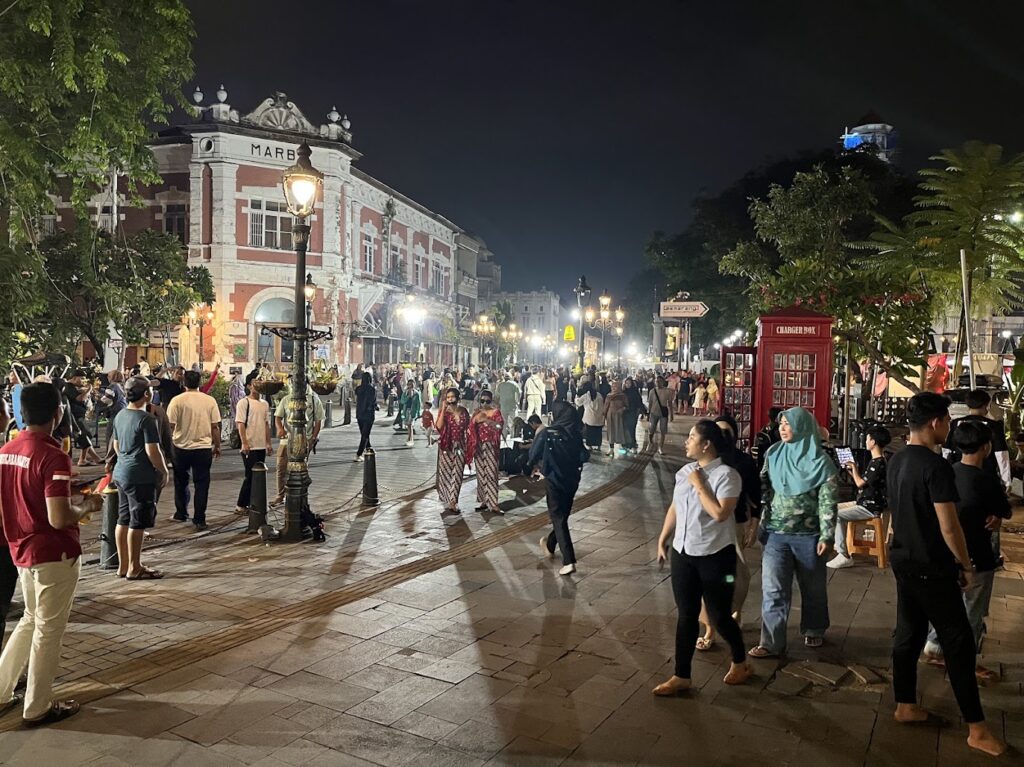
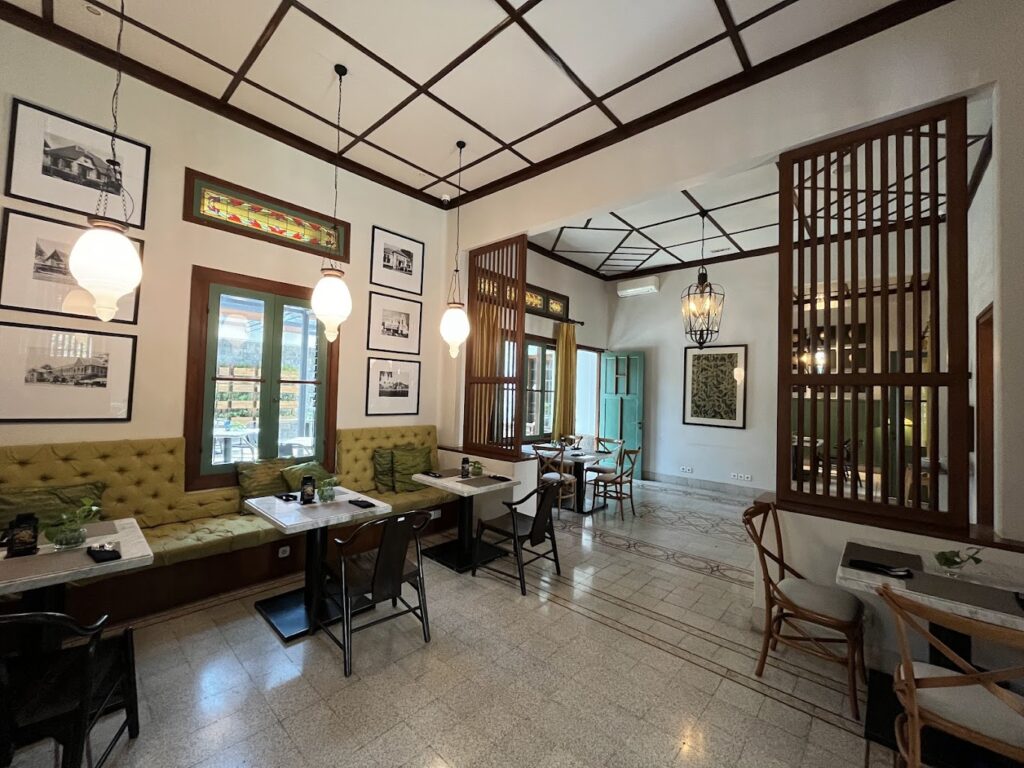
On weekend nights, the main street cutting through Kota Lama, the historical inner city of Semarang, is closed off for traffic and it instantly turns into a kind of fairground for throngs of young people, with street vendors, music and photoshoots. Waiters in a hip restaurant in a former colonial house in Malang are setting tables with freshly polished cutlery, vintage-styled glasses and thick cotton napkins, getting ready for that evening’s fully booked seating. Couples, groups of friends and school classes shuffle past dioramas depicting iconic moments of Indonesia’s independence struggle in the dimly lit galleries of Benteng Vredeburg, the former Dutch fortress opposite the Kraton in Yogyakarta. A solemn voice-over explains the production process of sugarcane in the 1862 former sugar factory of De Tjolomadoe just outside Solo, after an extensive revitalization effort now boasting a museum, restaurant and event spaces.
In the last ten years increasingly, historical buildings and public spaces are being revitalized by private investors and local governments in cities throughout Indonesia. Many of these urban spaces have been constructed during the Dutch colonial period, and thus have a history that may be regarded as contested or at least difficult. Still, many of these revitalized urban spaces seem popular and are frequented by primarily young people. This development, which I witnessed when visiting Indonesia on annual trips since 2016, is both interesting and remarkable, especially considering the sometimes heated but much-needed debates in the Netherlands on its colonial history and its traces and impact on communities today. I felt an intrinsic urge to understand this Indonesian trend and emerge myself in the many, often successful, heritage revitalization projects in Indonesia. Hence, my PhD research, which I started as external candidate at Erasmus University Rotterdam in 2021, revolves around the question of how young Indonesians (aged 18 to 34 years) use revitalized Dutch colonial urban spaces in Indonesian cities, what they know about these spaces and how they perceive them.
I am very grateful to the Marinus Plantema Foundation, who agreed to support the first big data collection and field work of my research. Through this support, I was able to team up with Indonesian blog platform Kompasiana on which my online survey was published in late 2023-early 2024, along with a blog competition in which Kompasiana followers were invited to write about Dutch colonial urban spaces in their own neighbourhood or city. This resulted in more than 700 fully filled in surveys, as well as more than 120 blog posts. The support of the Marinus Plantema Foundation also enabled me to travel to Indonesia for five weeks in summer 2024. The main goal of this trip was to learn Indonesian at language school Alam Bahasa in Yogyakarta. Throughout my stay I did (preparatory) fieldwork in various cities, namely in Surabaya, Malang, Yogyakarta, Semarang, Magelang, Solo, Kaliurang and Jakarta. I also presented my research and the first findings which the online survey had generated on several occasions: at the International Convention of Asia Scholars (ICAS) in Surabaya, at Universitas Negeri Malang, at Universitas Gadjah Mada, and on invitation of the Dutch embassy in Jakarta at a sneak preview event of the new Tugu Hotel in Kota Tua Jakarta. I was also interviewed for the podcast ‘Talking Indonesia’ of the University of Melbourne. After my return to the Netherlands, I gave further guest lectures for Universitas Negeri Solo (online), at the Royal Netherlands Institute of Southeast Asian and Caribbean Studies (KITLV) in Leiden, where I have been an affiliated fellow since 2023, and at Leiden University. I was also interviewed for the American online newspaper ‘Courthouse News Service’. In short, my research has progressed tremendously, in terms of data collection and exposure, which would not have been possible without the support of the Marinus Plantema Foundation. You may follow the progress of my research through my Instagram account.