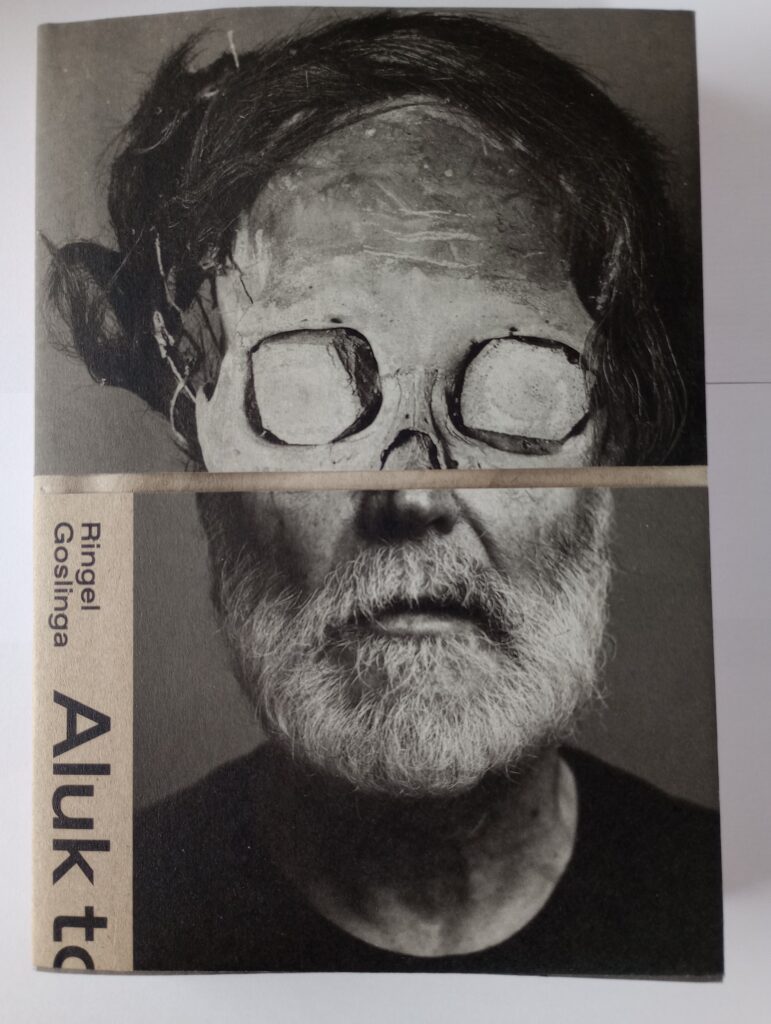
by Ringel Goslinga
Thanks to the generous support of the Marinus Plantema Foundation, Aluk to Dolo, a project by artist and visual storyteller Ringel Goslinga, was able to grow into a richly layered exploration of history, heritage, and identity. Focusing on the Toraja community in Sulawesi, Indonesia, the project traces the enduring visual and spiritual legacy of this unique culture, while simultaneously engaging with the impact of colonialism, missionary work, and Western influence.
In 1913, a Dutch Christian mission was deployed to the Toraja highlands. Its arrival was met with mixed reactions, culminating in the violent death of A. A. van de Loosdrecht, the first missionary, who was killed by a spear. This event marked a low point in the already fraught relationship between colonisers and indigenous communities. Over time, most Toraja converted to Christianity, and many traditional feasts and animist rites were banned in exchange for access to education, churches, and medical care. With this shift, a vast amount of cultural knowledge—including weaving techniques and the symbolic meaning of everyday and ritual objects—began to fade.
More than a century later, Goslinga travelled to Sulawesi to explore both his personal roots—being a descendant of a Dutch colonial family with ties to Indonesia—and the current state of Toraja culture. What began as a photographic inquiry into the relationship between ancestor worship and missionary activity evolved into a broader ethnographic and artistic investigation. Goslinga encountered a community where certain customs persist: practical utensils are still woven from natural materials, while many symbolic objects, such as devil banishers and medicine boxes, have (almost) disappeared.
During his research, Goslinga unearthed archival material revealing that many woven objects had once been sent to the Netherlands for study. This discovery spurred a deeper investigation into the animistic patterns and traditional weaving forms that carry centuries of cultural knowledge. As he learned the ‘language’ of weaving, Goslinga sought to document and preserve what remains—before these traditions fall entirely into oblivion.
The result is Aluk to Dolo, a compelling body of work and publication in which historical, artistic, and anthropological threads are carefully interwoven. This kaleidoscopic project merges past and present, offering readers and viewers an immersive entry point into a culture shaped by resilience, adaptation, and loss.
By supporting this project, the Marinus Plantema Foundation has helped to bring forward an important and rarely seen perspective within Dutch visual culture.